Drum and bass guide
What is drum and bass?
Fast breakbeats, deep sub-bass and the British rave continuum behind a global genre usually played between 170 and 180 BPM.
From a British rave continuum to a global genre.
Drum and bass emerged from the same British rave continuum as jungle. It kept the fast breakbeats and sub-bass, then developed a technical school, its own institutions and, eventually, festivals on five continents.
This guide covers where that turn happened, how the music is put together, the branches it grew, and how a sound made in Britain ended up being made everywhere.
1994 to 1995
When jungle and drum and bass diverged.
The two DJs who ended up carrying the genre longest had been doing the thing it is named after since before it had the name. Fabio and Grooverider held the Rage nights at Heaven, off Charing Cross, where the practice was to play hardcore records as fast as a pair of Technics would go, pitching them up on the deck until the break turned into something else. That is where the tempo came from, and it helps explain why two DJs rather than two producers ended up holding drum and bass's national Radio 1 show from 1998 until 2012.
There is no clean date for the split, and any account that gives you one is tidying up. Through 1994 and 1995 the change happened gradually and unevenly, and it was as much about the name as the music.
By 1994 jungle had reached the UK charts and daytime radio, and the version of it that reached them was ragga jungle: Jamaican vocal samples, reggae basslines, MC energy. Some producers did not want their records filed under that, partly on sound and partly because the word jungle now carried associations, about class, about race, about violence at certain raves, that had little to do with what they were making. The term drum and bass gave them a way out. Goldie founded Metalheadz in 1994 with Kemistry and Storm, and the label described its aim as reworking breakbeat and jungle "into a new dimension, drum 'n' bass". His album Timeless, released in August 1995, made that ambition legible to people who had never been to a rave.
Goldie did not arrive from nowhere, and neither did the rename. The label most of that generation passed through was Reinforced Records, founded in 1989 in Dollis Hill by Marc Mac and Gus Lawrence, later joined by Dego McFarlane and Ian Bardouille. Marc Mac and Dego are 4hero, and their "Mr Kirk's Nightmare" sold more than 24,000 copies and paid for the label. Goldie drew Reinforced's artwork before he made records for it, released as Rufige Kru, and ended up running its A&R. When anybody lists the producers who shaped drum and bass, 4hero is usually the first name, and the reason is the address rather than any single record: between 1991 and 1994 the darker, faster end of hardcore was posted to Dollis Hill. Their own Parallel Universe, in 1994, has been called the first drum and bass album, and Two Pages, in 1998, was shortlisted for the Mercury Prize and won a MOBO.
The argument about what was gained and lost in that rename, who got left behind, and what General Levy did or did not say, is the jungle scene's own story, and the jungle guide tells it as an epilogue. For drum and bass it is the starting point, but not a clean ending for jungle. Everything after this section follows the directions that increasingly travelled under the newer name.
How drum and bass is built: 174 BPM, the break and the low end.
Drum and bass BPM sits at 174, give or take a couple either side, and almost everything else about the genre follows from that number.
The tempo is the first fact. Drum and bass sits between 160 and 180 beats per minute and has settled, since about 1996, on 174 as a de facto standard. That is fast, and it is why the drums matter so much: at that speed a producer cannot lean on a four-to-the-floor kick, so the rhythm is carried by a breakbeat, a sampled and rearranged drum passage from a funk or soul record. The break most associated with the genre is the Amen, six seconds of drums from a 1969 B-side, timestretched and cut apart into new patterns. That editing technique, and the copyright story around the break, is the subject of the breakbeat guide; the way jungle producers first weaponised it at speed is covered in the jungle guide.
Two drum feels dominate. The two-step is spare, a kick and a snare with air around them, laid out so the track glides rather than tumbles; Alex Reece's "Pulp Fiction", from 1995, is the record usually pointed at as the template. The rolling break is denser, more of the original break left intact, pushing forward under the bass, and a heavy example from the same year is Dillinja's "The Angels Fell". Underneath either feel sits the bass, and drum and bass treats bass as a lead instrument rather than a support. Often it is a sustained sub, felt more than heard on a small speaker. Often it is a Reese, a detuned, moving growl named after a late-1980s Kevin Saunderson bassline, which later producers sculpted into the genre's most recognisable sound.
This is also the clearest way to place drum and bass next to dubstep. Both are bass-led British music, but drum and bass runs at full tempo with a busy break, while dubstep sits at around 140 with the kick and snare spread so far apart that the track feels half as fast. Same lineage, opposite solutions to the same question about weight and space. The dubstep guide covers the other side of that split.
Metalheadz and the dark turn.
By 1995 drum and bass had a home for its most forward material: the Metalheadz Sunday session at the Blue Note in Hoxton Square, a small room where the label's roster tested records on a system in front of a crowd that did not applaud politely. Timeless had given the genre a broadsheet profile. What happened next inside the clubs went the other way.
The Sunday Sessions ran for roughly three years, until the Blue Note closed in 1998, and they worked the way jungle's pirate-and-dubplate economy had: a producer cut a new track to acetate, played it once into that room, and watched what it did. It was scarcity as a physical property of vinyl, the same practice moved into a genre with A&R and press. The people who carried the dubplate culture from jungle into this are the jungle guide's territory.
The harder direction is usually traced to No U-Turn, Nico Sykes' studio and label in north London, and to a group of producers around it: Ed Rush, Trace, Nico, Fierce. Their records replaced the jazz and the atmospherics with distortion, compression and a machine-shop rhythm, and the compilation Torque, in 1997, collected the results. The name that stuck to it, techstep, is usually credited to that circle and spread through Grooverider's Radio 1 sets; who first used it in print is not settled. Doc Scott's "Shadow Boxing", released under his Nasty Habits alias on his own 31 Records in 1996, is the record most people reach for when they want to show what the dark side sounded like. In 1998 Ed Rush and Optical founded Virus Recordings and released the album Wormhole, which took the techstep template and made it funkier and more precisely edited, and pointed at what would be called neurofunk.
The atmospheric line: Speed, Bristol and Good Looking.
The dark turn was one answer to 1995. Another ran through a club night called Speed, at the Mars Bar in central London, where Fabio and LTJ Bukem played the jazz-facing, melodic end of the music to a room that wanted to listen rather than rush. Bukem's label Good Looking and its Logical Progression compilation series, the first in 1996, gave that sound a catalogue. His 1993 track "Music" is the usual reference: strings, a soft break, no drop in the modern sense. For a few years this branch was marketed as "intelligent drum and bass", a label that made a real distinction at the time and has aged into an embarrassment, since it implied the rest of the genre was not.
The other centre of the melodic version was not in London at all. In Bristol, Roni Size, Krust, Die and Suv formed the collective Reprazent, and Bristol labels, Full Cycle and the V Recordings axis run by Bryan Gee and Jumpin Jack Frost, built a rolling, jazz-inflected sound with a live-band feel. In 1997 Reprazent's New Forms won the Mercury Prize, beating OK Computer, and for a moment the sound of British music writing about itself was a drum and bass record made in Bristol. "Brown Paper Bag", from that album, is the track that reached people who owned no other record in the genre.
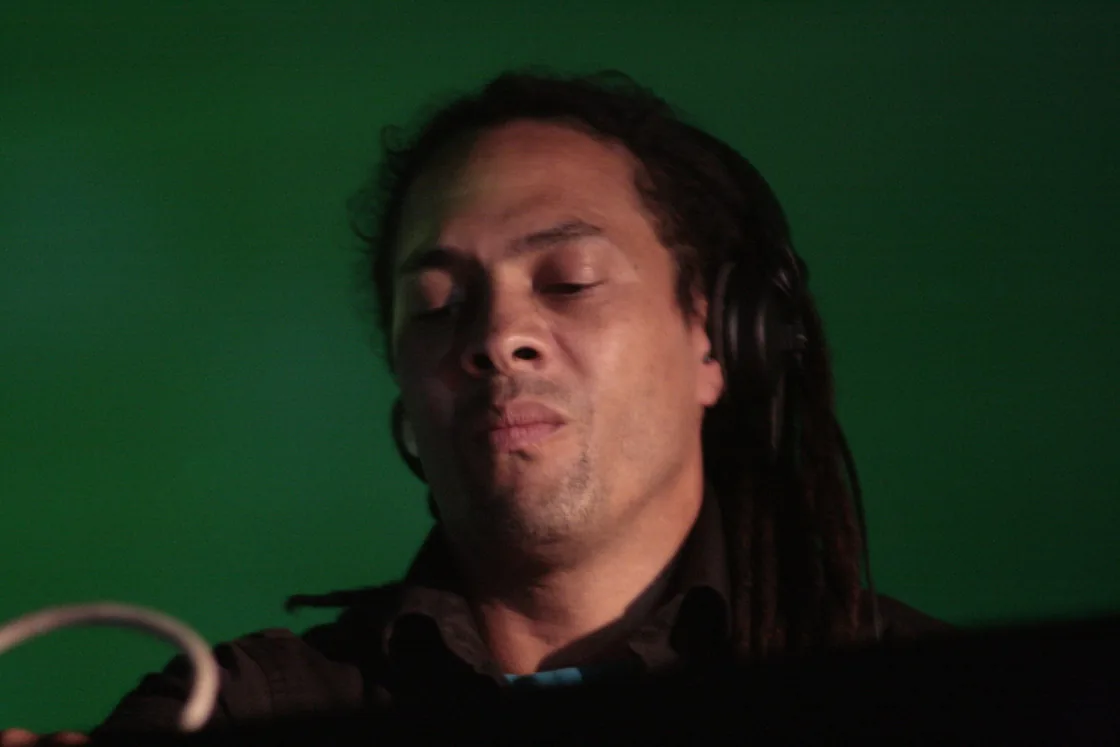
By 2000 the melodic branch had a name of its own, liquid drum and bass, after a Fabio mix CD called Liquid Funk, and it became one of the genre's most exportable forms: soulful, vocal, built on rolling two-step, carried by Calibre, High Contrast, Marcus Intalex and, later, the Hospital Records roster. High Contrast, a Welsh producer signed to Hospital, is the version of liquid that kept the soul samples and the big room at the same time; "The Basement Track" is the one that still gets played. Grooverider and Fabio took the whole spread of it onto national radio, holding a weekly Radio 1 drum and bass show from 1998 until 2012.
The subgenres and what they mean.
Drum and bass argues about terminology as much as jungle does, and most of the arguments are about where one branch ends and the next begins. The table sets out the main terms, roughly when each one appeared and how it relates to the core sound.
None of these are sealed boxes. A liquid producer will make a jump-up record; a neurofunk engineer will cut something almost ambient. The labels describe tendencies and scenes more than they describe rules.
| Term | Roughly when | What it means | Relationship to the core |
|---|---|---|---|
| Drum and bass (the core) | 1994 onward | Around 174 BPM, breakbeats, sub-bass as a lead voice | A broader genre that emerged from the same continuum as jungle |
| Liquid, or liquid funk | 2000 onward | Melodic and soulful, rolling two-step, vocals and chords | The mellow line, named after Fabio’s 2000 mix CD |
| Jump-up | Mid-1990s onward | Hook-led basslines, direct drops and dancefloor-first arrangements | A party-facing branch associated with DJ Zinc and Aphrodite |
| Techstep | Mid-1990s onward | Machine-led, industrial and sci-fi; distortion and compression | Its formative 1996–99 period centred on No U-Turn and Torque |
| Neurofunk | Late 1990s onward | Techstep-derived bass modulation, precise drums and prominent midrange layered over low-end weight | Descends from techstep; Ed Rush and Optical, then Noisia |
| Darkstep | Late 1990s onward | Dark atmospheres, aggressive bass and hard-edged drums | A heavier branch overlapping with techstep and later neurofunk |
| Drumfunk | Late 1990s onward | Dense, hand-edited breakbeats with detailed rhythmic variation | A break-focused lineage associated with Photek and Paradox |
| Halftime | 2010s onward | Drum and bass sound design at a half-time drum feel | The point where its tempo logic meets dubstep’s |
2000s onward
How drum and bass became global.
Drum and bass was rooted in London and Bristol, but within a decade it was being made far beyond either city. Brazil built one of the first major scenes outside Britain: DJ Marky, XRS and Patife connected to the UK through Bryan Gee's V Recordings, and Marky's crossover with "LK", made with XRS and Stamina MC in 2002, became a UK club staple. Continental Europe followed, and by the 2010s major events included Rampage in Antwerp and Let It Roll in the Czech Republic. Toronto is often cited as an important early North American centre.
The music also kept moving between the deep side and the loud side without ever fully resolving. The Bristol and liquid lineages carried the melodic version; jump-up held the dancefloor; neurofunk went to the Netherlands with Noisia and Black Sun Empire and became a global technical benchmark.
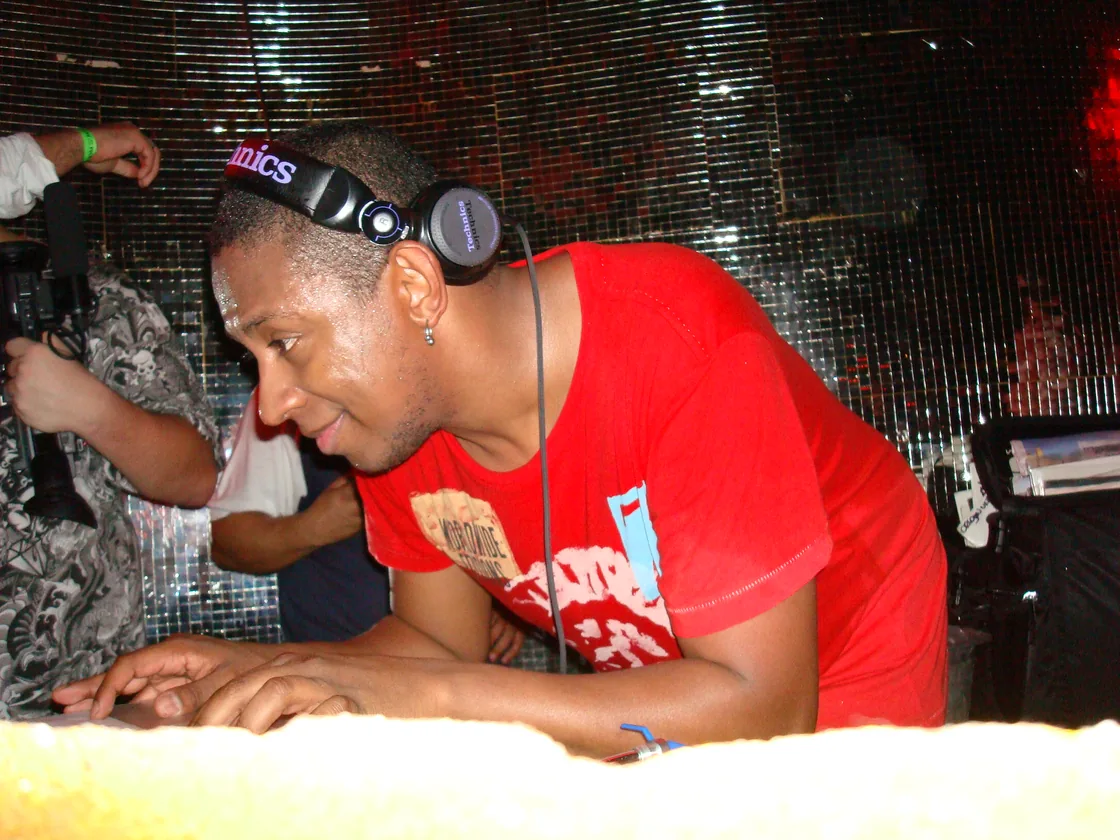
None of that travelled on its own. It travelled through labels and touring networks, often shaped by a small number of people with a clear taste. Andy C founded RAM Records in 1992 with Ant Miles, and RAM became a durable route from dancefloor records to international rooms. DJ Hype's Playaz did similar work for jump-up, the loud, hook-led branch that fills rooms and gets written about least. Hospital Records, started in 1996 by Tony Colman of London Elektricity and Chris Goss, turned the liquid end into a catalogue, a festival and a touring show. Together, those institutions helped make distinct branches of drum and bass legible outside their original local scenes.
The other thing that happened in those years is that the music kept turning up in the singles chart, which the scene has never quite known what to do with. Pendulum's Hold Your Colour, made in Perth by Rob Swire, Gareth McGrillen and Paul Harding and released in 2005, became one of the genre's best-selling albums. In 2012 the genre took its first UK number one, DJ Fresh's "Hot Right Now" with Rita Ora, and the run did not stop there: Rudimental's "Feel the Love" the same year and "Waiting All Night" in 2013, Sigma's "Nobody to Love" and "Changing" in 2014, Kenya Grace's "Strangers" in 2023, Chase & Status and Stormzy's "BACKBONE" in 2024. A guide is allowed to prefer other records and still has to count these. They document a sustained crossover that an account running from Metalheadz straight to Nia Archives would miss.
Since 2021 there has been a resurgence, and this time the numbers are attached to it: Spotify reported drum and bass streams up around 94 per cent between 2021 and 2024, with most of those listeners under 34, and Pitchfork wrote in 2021 about a rising zoomer affinity for the genre. Nia Archives is the name most attached to the revival; her 2024 album Silence Is Loud reached number 16 on the UK albums chart, and it does the thing the whole guide keeps circling back to, folding jungle's breakbeats and reggae feel back into a drum and bass record. The jungle guide covers that revival from the other end.
Where drum and bass is now.
There is no single contemporary drum and bass sound. Festival-facing dancefloor records, jungle-informed breakwork, jump-up and deeper label-led music share the same international circuit without forming one unified revival.
Today's drum and bass artists do not form one movement. The chart-facing records, Nia Archives' jungle-informed work, international neurofunk and long-running liquid and jump-up scenes described above coexist rather than replacing one another. The overlap with jungle is visible again, but the two identities have not collapsed into one. Drum and bass also has a back catalogue deep enough that a new listener can spend a year inside 1995 alone, while current producers keep using the same break-and-bass framework for different rooms and audiences.
Drum and bass FAQ.
What does DnB stand for?
DnB stands for drum and bass, also written d&b, drum & bass or drum'n'bass. It is a British electronic music genre that usually runs between 170 and 180 BPM, often around 174.
What BPM is drum and bass?
Usually between 170 and 180, and most often 174. Because the kick and snare are spread across the bar, the track can also be felt at half that speed, around 87, which is what makes half-time drum and bass and some dubstep sit close together.
Is drum and bass the same as jungle?
The difference is partly musical and partly cultural. Jungle emerged first and remains closely tied to chopped breakbeats, reggae, dub, MCs and sound-system culture. Drum and bass became a broader label during the mid-1990s as technical, atmospheric and other directions developed. Their histories, tempos and production language overlap, but jungle did not end when drum and bass became established.
Is drum and bass British?
Yes. Drum and bass developed in Britain during the mid-1990s from the same rave continuum as jungle, with London and Bristol as major centres. It later became a global genre, but its breakbeat, bass and sound-system foundations remain rooted in British club culture.
When was drum and bass invented?
There is no single invention date. The name and a more distinct drum and bass identity became increasingly common during 1994 and 1995 as parts of the jungle scene moved towards technical, atmospheric and less ragga-led production. Producers, DJs, labels, pirate stations and clubs shaped that change collectively rather than one person inventing the genre.
What are the main drum and bass subgenres?
The most common branches are liquid, jump-up, neurofunk and techstep, with darkstep, drumfunk and halftime as narrower terms. Liquid is the melodic, soulful side; jump-up is the big-bassline party side; techstep and neurofunk are the harder, machine-led side.
Sources.
Continue reading
Read next.
 Music history~22 min read
Breakbeat Music: History, Sound and Evolution
From funk breaks and pirate radio to cracked VSTs and modern bass hybrids.
Read article → Music history~18 min read
Jungle Music: From Roots to Revival
Pirate radio, dubplates, MC energy and the global return of a distinctly Black British sound.
Read article → Music history~16 min read
What Is UK Garage? The Sound, 2-Step, Speed Garage and Bassline
London played an American record too fast until the beat broke. The branches it split into, and the numbers behind its revival.
Read article → Music history~15 min read
What Is Dubstep? Origins, Sound and the Genre Split
From south London record shops and 200-capacity basements to a genre that split into two sounds sharing one name.
Read article →